Technological progress
10 years of TWINT: From a niche product to the Swiss standard
10 years of TWINT: From a niche product to the Swiss standard
The term ‘twinting’ is now almost as common as ‘googling’. The Swiss payment app has become synonymous with mobile payments and is playing a pioneering role in Europe.
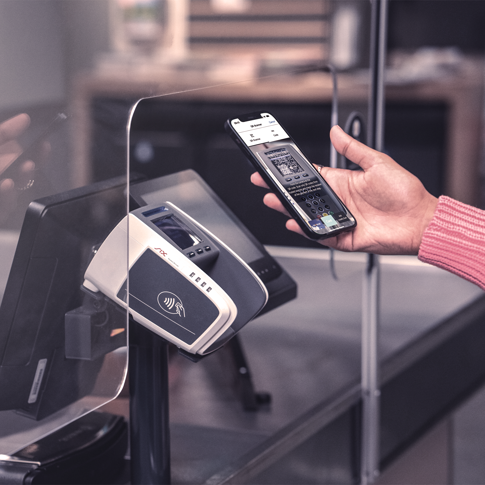
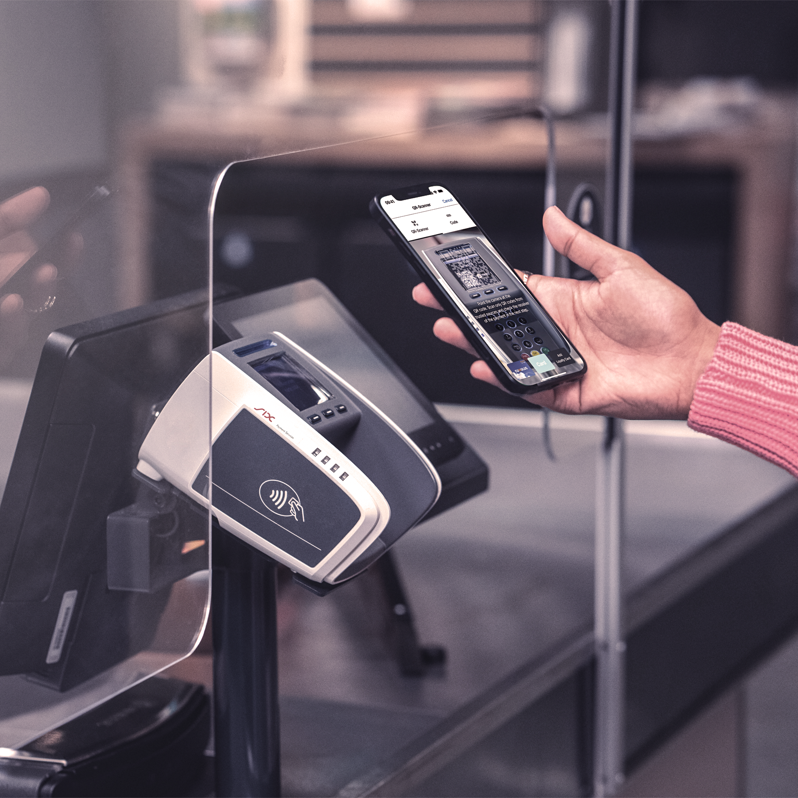
In the past, people would reach for their wallets; today, they reach for their smartphones. Whether it’s for the weekly shop, at a parking meter, in a café, when shopping online, or to pay back money borrowed from a friend – mobile payments have become part of everyday life in Switzerland.
This development in Switzerland has been driven primarily by the TWINT payment app, which will celebrate its 10th anniversary in 2026. Although the roots of the current app date back to 2014, when TWINT was founded as a subsidiary of PostFinance, the platform in its current form only came into being in 2016 following its merger with Paymit, another Swiss mobile payment solution at the time, which had been developed by the Swiss stock exchange operator SIX in collaboration with UBS and ZKB.
Six million users
Today, TWINT is an integral part of everyday life in Switzerland: over six million people use the app. In 2025, over 900 million transactions were processed. Three-quarters of these were payments to businesses and organisations, whilst around a quarter were transfers between private individuals.
Wide-ranging use as a key to success
A key factor in TWINT’s success has been its ambition, right from the start, to be more than just a digital version of a debit card. The app combines numerous functions on a single platform: for example, shopping in-store and online, money transfers between private individuals, paying for parking, buying tickets and making donations.
Users can also link their loyalty cards – such as those from Migros – take out insurance policies or take part in competitions. As a result, many users access the app several times a day.
Cooperation rather than competition
Just as important as widespread adoption was the cooperation between the parties involved. Rather than developing several competing solutions, banks and other partners joined forces to create a single shared platform. TWINT is jointly owned by UBS, PostFinance, Raiffeisen, ZKB and SIX, and others.
This joint ownership increased acceptance on all sides. Users did not have to choose between different apps, and merchants did not have to integrate multiple systems. In hindsight, the early agreement on a common standard proved to be a key factor in the project’s success.
Switzerland as a special case
By international standards, it is remarkable that a national solution has been able to establish itself in Switzerland. In many countries, mobile payments are currently dominated by US providers such as Apple Pay, Google Pay and PayPal. Whilst Apple Pay does hold a significant share in Switzerland too, at around 17 per cent, TWINT clearly dominates the mobile payments market with 63 per cent.
In Europe, there are comparable systems such as Swish in Sweden, iDEAL in the Netherlands and the new European payment system Wero, which is currently undergoing significant further development. However, most of these solutions focus on specific areas, such as online retail or person-to-person payments. Apple Pay, too, has a narrower scope: payments between friends are only possible via the service in the US.
The broad range of applications that TWINT offers is still the exception rather than the rule. This may help explain its great success.
An integral part of the payment mix
Mobile payments have become an integral part of Switzerland’s payment mix. Nevertheless, TWINT has not completely replaced other payment methods. Cash, debit cards and credit cards continue to play an important role.
The story of TWINT shows how a national solution can establish itself even in a market dominated by global technology companies –through collaboration, shared standards and tangible benefits in everyday life.