Switzerland as a business hub
Why strong banks are essential for the industrial sector
Why strong banks are essential for the industrial sector

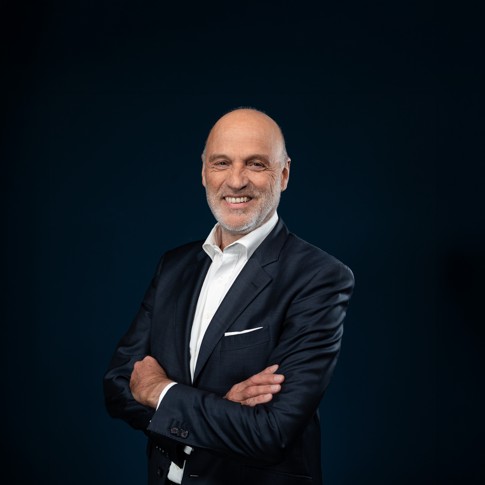
Robust major Swiss banks and a regulatory framework free from excessive regulation – that is what Barend Fruithof is calling for. The CEO of the industrial group Aebi-Schmidt is convinced that high capital requirements could ultimately hold back the entire industry.
From the farm to the bank to an industrial CEO: Barend Fruithof’s career shows just how closely banks and the industrial sector are interconnected. As a farmer, he gained experience of manual labour. He subsequently worked in banking for around 25 years, as a corporate banker and in management roles at banks such as Raiffeisen and Credit Suisse.
During this time, he learnt what companies need: reliable financing, swift decision-making processes, and an understanding of risks and markets. Today, he heads Aebi Schmidt, a global industrial group – and knows just how vital a strong banking centre is for Switzerland as a business location.
A tarnished image of the banking sector
Yet the Swiss public views financial institutions with growing scepticism and this worries Fruithof: “Since the financial crisis and the collapse of Credit Suisse, pride in Swiss banks has been lost.”
He observes that many underestimate the importance of the banking centre in imagining companies come to Switzerland primarily for the tax advantages. Fruithof disputes this. He says it is about political stability and a sound banking system.
“We should take care to preserve this model,” says the CEO. For Switzerland, private banking is particularly important: “It brings money into the country, which is then fed back into the market in the form of loans.”
Warning against excessive regulation
At the same time, the regulatory environment for the major banks has changed significantly. For Fruithof, this is understandable overall, but the regulation can be excessive. Following the collapse of CS, adjustments are certainly needed, but: “we shouldn’t throw the baby out with the bathwater”.
The danger is that if a big bank is “burdened with excessive capital requirements”, this creates a competitive disadvantage – with consequences for the economy.
Fruithof cites an example from his own firm: even a one-per-cent increase in interest on a large three-year loan would be enough to prevent Aebi Schmidt from developing a new machine.
Diversity of the banking sector is key
Fruithof therefore advocates for robust Swiss major banks and a diverse banking sector. He is surprised by those who would accept UBS moving abroad: “We should do everything we can to ensure it stays here in Switzerland and has favourable operating conditions.” A strong big bank in the domestic market is indispensable, he believes, particularly for internationally active companies such as Aebi Schmidt.
At the same time, he emphasises the diversity of the Swiss financial centre: there is a need for cantonal and regional banks that know and serve local SMEs and private clients. Likewise, there is a need for institutions such as asset management firms and private banks that fulfil complementary roles.
After all, without banks, there is no industrial base – and without an industrial base, the financial centre loses its foundation.
You can listen to the full conversation in German on the podcast “Zuhause in zwei Welten” (“At Home in Two Worlds”)