Wealth Management
“How do I get rich?”: food for thought on building wealth
“How do I get rich?”: food for thought on building wealth
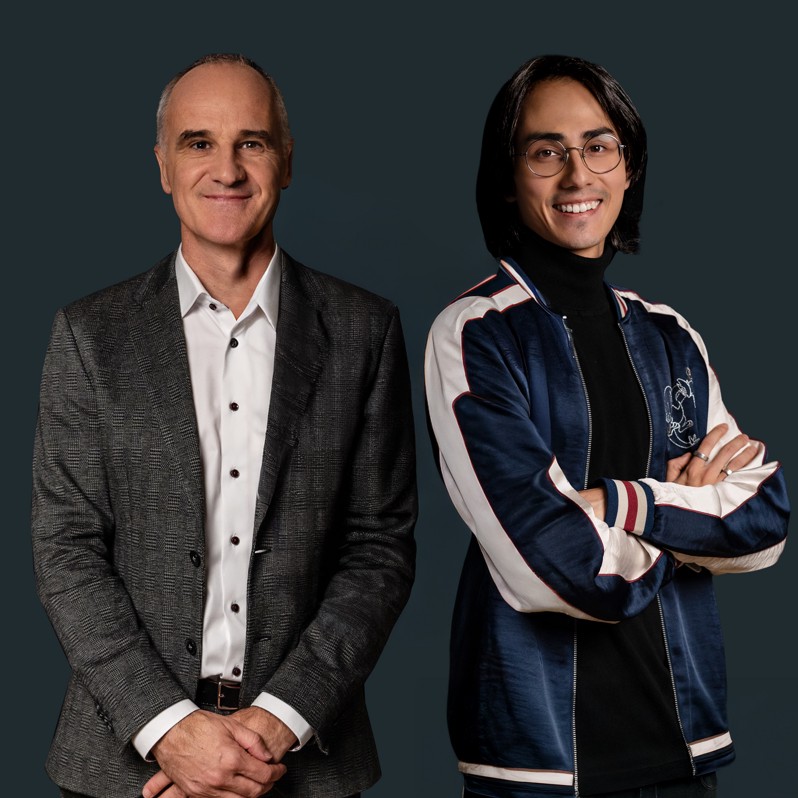
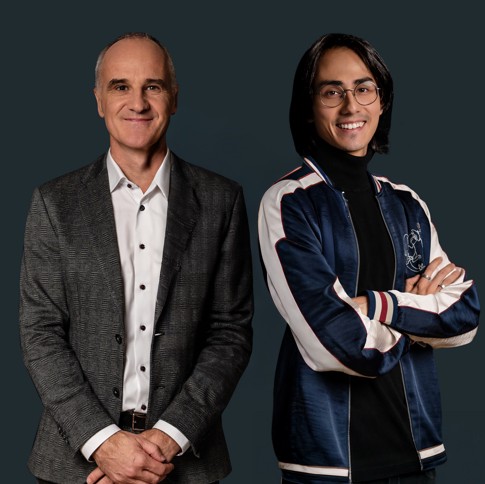
Financial blogger ‘Thomas der Sparkojote’ and Raiffeisen CIO Matthias Geissbühler discuss wealth and risks – as well as the role of banks in building wealth.
What is wealth?
Thomas der Sparkojote: “For me, wealth means being able to decide for myself how I spend my time. But how much money that takes is different for everyone.”
Do savers become rich?
Matthias Geissbühler: "No. Nobody builds up wealth with a traditional savings account these days. Interest rates are practically zero, and inflation means that money loses its purchasing power."
Sparkojote: “If you want to build up wealth, investing is essential.”
What is crucial for long-term success?
Geissbühler: "Diversification! With a broadly diversified equity portfolio, you can expect long-term asset growth of several per cent per year."
Sparkojote: “However, it's also clear that the more diversified a portfolio is, the closer the return will be to that of the market as a whole. Warren Buffett didn't beat the market for decades through hyper-diversification, but because he temporarily overweighted the stocks of certain companies.”
Geissbühler: “But it's one of the biggest mistakes to believe that you can accurately pick the three stocks that will rise 50 per cent next year. You might win once – similar to winning the lottery – but the majority won't be happy with that.”
Sparkojote: “I don't just rely on individual stocks either. A quarter of my investments are global ETFs that track the performance of the global stock market.”
Geissbühler: “But even global ETFs can be heavily concentrated in certain regions or sectors. US stocks now account for around 75 per cent of the MSCI World Index.”
Sparkojote: “That's why you should also actively diversify with ETFs. By combining different global ETFs, other countries can also be weighted more heavily.”
How the MSCI World is formed
The MSCI World selects companies from 23 industrialised countries that together cover around 85% of the national free float market capitalisation (market value of freely tradable shares).
Free float comprises shares held by small investors and institutional investors – major shareholders (>5%) are excluded because their long-term shareholdings are illiquid and do not reflect market developments.
All selected companies are then weighted globally according to their individual market capitalisation, which explains the dominance of US stocks in the MSCI. This is because the most valuable companies are headquartered in the US.
How much risk is required to achieve wealth?
Sparkojote: “At my age and in my life situation, I don't see any risk at all. What if my portfolio were to lose half its value now? Well, so be it – I don't depend on the money. However, for those who need part of their portfolio to supplement their state pension, such a crash would be fatal.”
In the age of investment apps what do banks offer investors?
Geissbühler: “Banks have the expertise that laypeople lack. There's the 10,000-hour rule: if you want to be a good tennis player, you have to have trained for at least 10,000 hours. And if you haven't given much thought to investing yet, you should seek advice.”
Sparkojote: “I once lost a lot of money because the platform I had invested in went bankrupt. What I learned from this is that if I have my assets managed, I have to trust the institution 99.99 per cent. And for me, that means Swiss banks and institutions.”